People

An unparalleled team of internationally recognized leaders acrossautonomy, aerospace, materials, and advanced manufacturing.

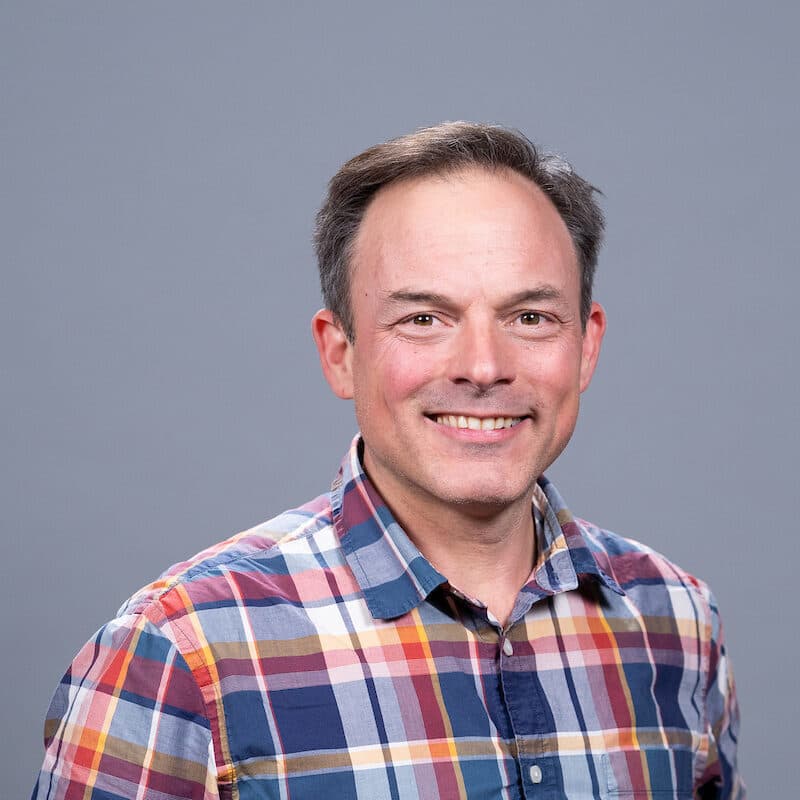
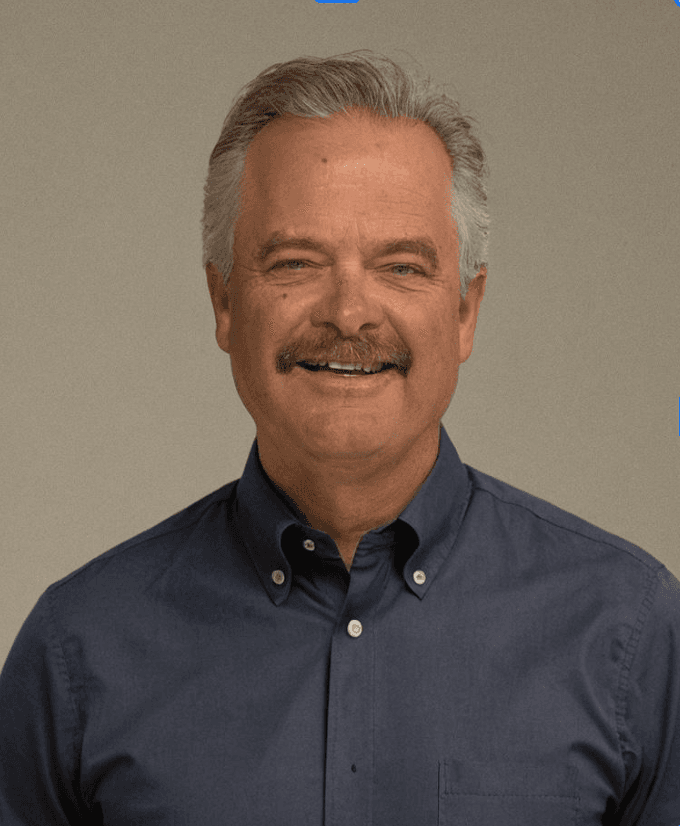
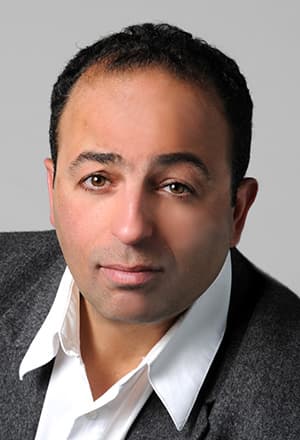
Photo of TAREK ZOHDI, Chief Executive Officer

Chief Executive Officer

TAREK ZOHDI

Professor of Mechanical Engineering

Tarek I. Zohdi received his Ph.D. in 1997 in Computational and Applied Mathematics from the University of Texas at Austin and his Habilitation in General Mechanics (Allgemeine Mechanik) from Gottfried Leibniz University of Hannover, Germany, in 2002. He is currently a Professor of Mechanical Engineering, Chair of the Designated Emphasis Program in Computational and Data Science and Engineering, Associate Dean for Research in the College of Engineering, and holder of the W. C. Hall Family Endowed Chair in Engineering at UC Berkeley. He also holds a Faculty Scientist position at Lawrence Berkeley National Laboratory and is Faculty Director of the Richmond Field Station. His research combines computational modeling, high-performance simulation, and machine learning to develop digital-twin technologies for drones, LiDAR and hyperspectral sensing, solar power, advanced manufacturing, fire control, next-generation food systems, and composite materials. He has published more than 200 refereed journal papers and nine books, and is Co-Editor-in-Chief of Computer Methods in Applied Mechanics and Engineering and co-founder and Co-Editor-in-Chief of Computational Particle Mechanics. His honors include the UC Berkeley Distinguished Teaching Award (2017), the Humboldt Research Prize (2020), and the Chancellor’s Distinguished Service Award (2026). He is a Fellow of the International Association for Computational Mechanics, the United States Association for Computational Mechanics, and the American Academy of Mechanics, and served as President of USACM from 2012 to 2014.
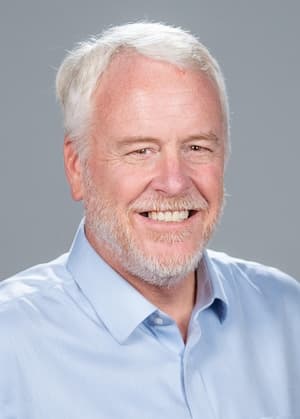
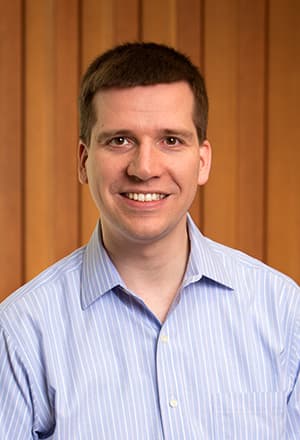
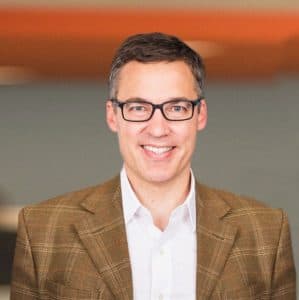
Photo of MARK ASTA, Principal

Principal

MARK ASTA

Dean of the College of Engineering; Professor of Materials Science and Engineering

Mark currently serves as Dean of UC Berkeley’s College of Engineering and is a faculty member in the Department of Materials Science and Engineering. Professor Asta joined the Materials Science and Engineering Department at Berkeley in January 2010 after serving as a staff scientist at Sandia National Laboratories and as a member of the faculties at Northwestern University and the University of California, Davis. Professor Asta has previously served as Department Chair of Materials Science and Engineering at Berkeley, Executive Associate Dean of Engineering at UC Berkeley, and Director of the Materials Sciences Division at Lawrence Berkeley National Laboratory. His research centers on computational materials science. He has authored more than 400 peer-reviewed publications, supervised 64 graduate students and postdoctoral researchers, and delivered more than 230 invited and keynote lectures. He is a Fellow of the American Physical Society and The Minerals, Metals and Materials Society (TMS). His research and advisory work spans industry, government agencies, national laboratories, and universities, including projects supported by the National Science Foundation, Department of Energy, Air Force Office of Scientific Research, Office of Naval Research, and DARPA.

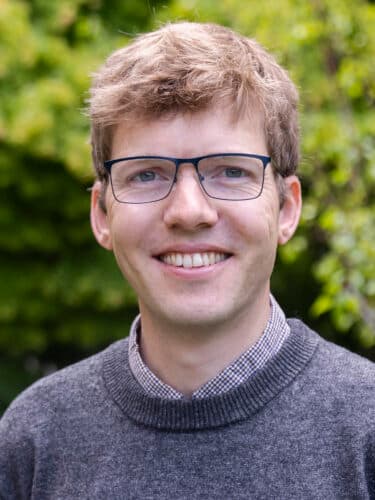
Photo of SIMO MÄKIHARJU, Principal

Principal

SIMO MÄKIHARJU

Associate Professor of Mechanical Engineering

Professor Mäkiharju joined the Mechanical Engineering Department at Berkeley in January 2016. His undergraduate studies were in Energy Technology at the Lappeenranta University of Technology, Finland. He earned his Mechanical Engineering M.Sc. from The Ohio State University in 2005 and his Ph.D. from the University of Michigan in 2012. His graduate research focused on reducing hydrodynamic drag via gas injection and developing time-resolved X-ray densitometry imaging systems for multiphase flows. At Berkeley, he leads experimental research on high–Reynolds-number single- and multiphase flows using hyperspectral imaging combined with advanced data analytics. He directs the FLOW Lab and the College of Engineering’s Physical Model Test Facility, developing measurement systems for problems that conventional instrumentation cannot quantify. Current work spans hyperspectral and multispectral imaging from X-ray to infrared, photon-counting detectors, and event-camera sensing with machine-learning-based triggering for rare-event capture. His group pairs these instruments with data analytics to turn spectral and radiographic measurements into usable quantitative data. He has transferred measurement methods across ship hydrodynamics, cryobiology, nuclear thermal hydraulics, and drones, working with industry, national laboratories, and federal agencies.

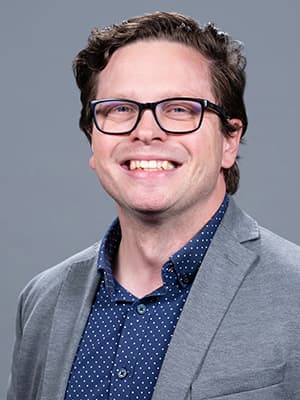
Photo of PETER HOSEMANN, Principal

Principal

PETER HOSEMANN

Professor of Nuclear Engineering

Professor Peter Hosemann earned his Ph.D. in Materials Science from the Montanuniversität Leoben (Austria) in 2008, followed by a postdoctoral appointment at Los Alamos National Laboratory, before joining the University of California, Berkeley. He is a Professor of Nuclear Materials and former Chair of the Department of Nuclear Engineering at UC Berkeley, where he directs the Manufacturing 360 Center, the Materials Characterization Facility, and the Master of Advanced Study in Engineering program. He holds joint appointments in Mechanical Engineering and Materials Science and Engineering. He also holds a joint appointment with Pacific Northwest National Laboratory. He serves as Deputy Editor of the Journal of Applied Physics and Associate Editor of the Journal of Nuclear Materials. His research has produced more than 300 peer-reviewed publications and includes leadership roles in major national research programs.

Photo of BASIL CLEVELAND, Principal

Principal

BASIL CLEVELAND

Basil is an expert in business process simulation, using both multi-agent modeling and system dynamics to describe complex organizational behavior. He is also a specialist in higher-education strategy, with particular expertise in designing enrollment and growth strategies for institutions operating in emerging and highly technical fields. Basil brings years of international education leadership to his role as Executive Vice President, Chief Innovation Officer, and Co-Founder at Shorelight. Basil holds a PhD in literature and philosophy from Boston University, where he also earned an MFA under the tutelage of three-time U.S. Poet Laureate Robert Pinsky.

Photo of MARK MUELLER, Principal

Principal

MARK MUELLER

Associate Professor of Mechanical Engineering

Mark currently serves as Associate Faculty Director of Aerospace Programs in the College of Engineering, UC Berkeley; and the Vice-Chair for Master of Engineering in the Department of Mechanical Engineering. Mark joined the Mechanical Engineering Department at Berkeley in August 2016. Professor Mueller received a B.Eng. in Mechanical and Aeronautical Engineering at the University of Pretoria in South Africa in 2008. He continued to his M.Sc. and Dr. Sc. in Mechanical Engineering at the ETH Zurich, in 2011 and 2015, respectively. Professor Mueller conducts research in Unmanned Aerial Vehicles, dynamics and control; motion planning and coordination; state estimation and localization. He leads the High Performance Robotics Laboratory, developing algorithmic and mechanical designs for drones and autonomous flight. He holds several patents related to this research, including inventions deployed in safety-critical industrial environments. He is the author of Dynamics and Control of Autonomous Flight, published in 2025, and was part of the CERBERUS team that won the DARPA Subterranean Challenge in 2021.

Photo of THOMAS SCHUTZIUS, Principal

Principal

THOMAS SCHUTZIUS

Associate Professor of Mechanical Engineering

Thomas Schutzius is an Associate Professor of Mechanical Engineering in the Energy Science & Technology group at UC Berkeley and a Faculty Scientist in the Energy Technologies Area at Lawrence Berkeley National Laboratory. He joined Berkeley in January 2023 and leads the Laboratory for Multiphase Thermofluidics and Surface Nanoengineering. His research connects thermofluidics, materials engineering, surface science, and interfacial transport to applications in sustainable water and energy technologies and healthcare. Before joining Berkeley, he was an Assistant Professor at ETH Zurich (2020–2022), where he received an ERC Starting Grant and the Golden Owl award for excellence in teaching. He earned his Ph.D. in Mechanical Engineering from the University of Illinois Chicago, where he received the Outstanding Thesis Award. His work includes 58 peer-reviewed journal articles in venues including Nature, Nature Physics, Nature Sustainability, Nature Nanotechnology, PNAS, and Science Advances, as well as a major technical book chapter. His inventions include six issued patents and one pending patent, and received a Top 5 ETH Spark Award nomination. He has advised more than 100 students and researchers, including master’s and doctoral students and postdoctoral scholars, and serves as an Editor of Experimental Heat Transfer.

Photo of KHALID M. MOSALAM, Principal

Principal

KHALID M. MOSALAM

Taisei Professor of Civil Engineering

Mosalam joined the Department of Civil & Environmental Engineering at UC Berkeley in 1997 where he is the Taisei Professor of Civil Engineering & Director of the Pacific Earthquake Engineering Research (PEER) Center. His research focuses on the performance & health monitoring of structures, assessment & rehabilitation of essential facilities, and building energy efficiency & sustainability. His work spans large-scale computational modeling & experimental testing, including hybrid simulation. He is a Corresponding Member of the Mexican Academy of Engineering in Civil Engineering and a Fellow of ASCE. He was a visiting professor at Kyoto Univ. (Japan), Middle East Technical Univ. (Türkiye) & Nanyang Technological Univ. (Singapore).

Photo of MICHAEL SANGID, Principal

Principal

MICHAEL SANGID

Chancellor’s Professor of Mechanical Engineering

Michael D. Sangid is a Chancellor’s Professor of Mechanical Engineering and Associate Director of the College of Engineering’s Aerospace Engineering Programs at UC Berkeley. His research combines mechanics, materials, and manufacturing to predict failure in aerospace structural materials, with experimental validation of stress and strain evolution at the microstructural scale during in situ loading. His work supports rapid qualification of additively manufactured materials and digital airworthiness. Before joining Berkeley, he was the Reilly Professor in Purdue University’s School of Aeronautics and Astronautics, with a courtesy appointment in Materials Engineering. He founded and served as the inaugural Executive Director of Purdue’s Hypersonics Advanced Manufacturing Technology Center under the Purdue Applied Research Institute. His experience also includes work on aerospace gas turbine engines at Rolls-Royce. His honors include the TMS Young Leaders Award, ASME Orr Award, TMS Early Career Faculty Fellow Award, TMS Brimacombe Award, NSF CAREER Award, AFOSR and ONR Young Investigator Awards, and DARPA Young Faculty and Director’s Awards. He is an AIAA Associate Fellow and an editor of the International Journal of Fatigue. His research leadership includes DARPA SURGE and Open Manufacturing, NASA work on durability and damage-tolerant modeling, and NIST work on metals-based additive manufacturing and rapid qualification.

Photo of JUSTIN WILEY, Principal

Principal

JUSTIN WILEY

ITS Strategy and Development Director

Justin Wiley is Strategy & Development Director at UC Berkeley’s Institute of Transportation Studies, and the Corporate Partnerships Strategist at the Richmond Field Station. He began his career in mobility as a student at UC Berkeley, where he co-founded Green Bike Share. In 2012, he joined the founding team at JUMP Bikes, helping to build and scale micromobility systems globally before the company’s $200M acquisition by Uber. He continued his work at Uber, expanding access to electric bikes and scooters in major cities worldwide. Justin later joined Swiftly, a public transit technology firm, where he led strategic partnerships to help agencies modernize operations through real-time data and analytics.

Photo of BEHÇET AÇIKMEŞE, Principal

Principal

BEHÇET AÇIKMEŞE

Chancellor’s Professor of Electrical Engineering and Computer Sciences, and Mechanical Engineering

Behçet Açıkmeşe is a Chancellor’s Professor in Electrical Engineering and Computer Sciences and Mechanical Engineering at the University of California, Berkeley. His research focuses on control theory, convex optimization, and robust and nonlinear control for autonomous aerospace systems. He earned his Ph.D. in Aeronautics and Astronautics from Purdue University and held faculty positions at the University of Washington and the University of Texas at Austin before joining Berkeley. As a senior technologist at NASA’s Jet Propulsion Laboratory and a lecturer at Caltech, he developed guidance and control algorithms for planetary landing, spacecraft formation flying, and asteroid and comet sample-return missions. His contributions include the flyaway control algorithms for the Mars Science Laboratory mission, which landed the Curiosity rover in 2012, and reaction-control-system algorithms for NASA’s Soil Moisture Active Passive (SMAP) mission. He invented G-FOLD, a fuel-optimal planetary landing guidance algorithm flight-tested by JPL, demonstrating real-time, optimization-based autonomous rocket guidance and control. His research record includes more than 250 peer-reviewed journal and conference publications, five book chapters, and publicly available numerical optimization software and JPL technical reports. He has chaired or co-chaired 26 Ph.D. students and 12 master’s students and supervised eight postdoctoral researchers. His honors include the NSF CAREER Award, IEEE Technical Excellence in Aerospace Controls Award, multiple best-paper awards, and numerous NASA achievement awards. He is a Fellow of IEEE and AIAA.

Photo of MARK SCOTT, Affiliate Partner

Affiliate Partner

MARK SCOTT

Urban Air Mobility

In 2019, Mark Scott began his journey entering the the airspace of UAM. As a licensed General Building and Engineering Contractor in California, Nevada, Arizona, Oregon, Washington and Hawaii, Mark and his team worked closely with the Contra Costa County Division of Airports and the Federal Aviation Administration to acquire and develop the first UAM test site located in Byron, Ca. Byron Airport (C-83) was one of California’s first Part 107 Test Sites approved in the state of California under the University of Alaska, Fairbanks as a Part 107 test site. This project consisted of a 5 acre development on airport property with newly constructed hangars designed for UAM design, testing and research. The airspace area provides for testing of Cargo and logistics, Infrastructure and surveillance and smart city initiatives contributing to sustainability and efficiency goals. Currently, Mark has embarked on another site located at the Oxnard Airport (OXR) with a 7 acre site development plan underway.