
Press release
Inaugural Multi-Drone Optimization Challenge (M-DOC)
- Location
- UC Berkeley Richmond Field Station
Drone Field #1 Building 300 - Event dates
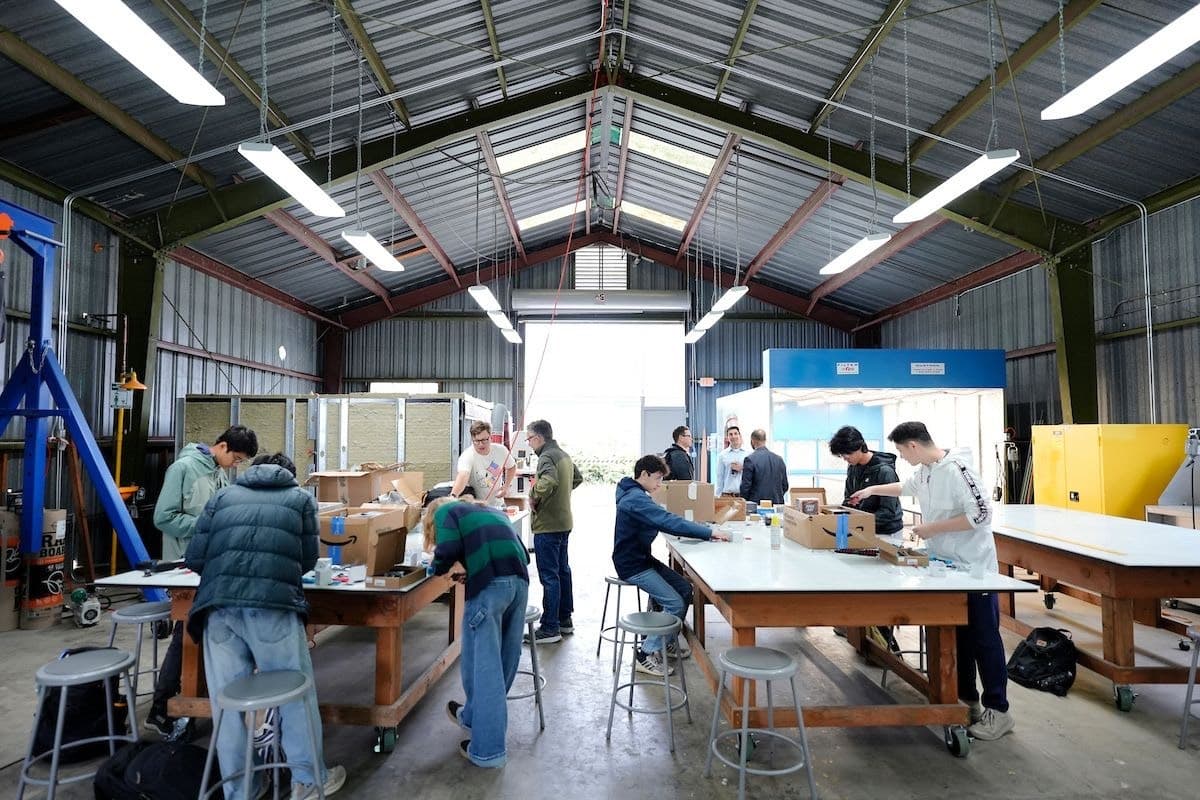
Students from UC Berkeley and local high schools got hands-on experience building and operating drones at the UC Richmond Field Station last week. The inaugural four-day "Multi-Drone Optimization Challenge" was hosted by the DEVCOM Army Research Laboratory and Berkeley Drone Technologies as part of the Army Educational Outreach Program (AEOP). The challenge guided students through the engineering life cycle of unmanned aerial vehicle (UAV) systems, covering topics ranging from autonomous flight systems to advanced sensing.
The Richmond Field Station (RFS) is a research facility of the University of California, Berkeley located in Richmond, California in the South Shoreline neighborhood of Richmond, just north of Albany and west/south of I-580, approximately 15 minutes away from the main campus in Berkeley.
The challenge
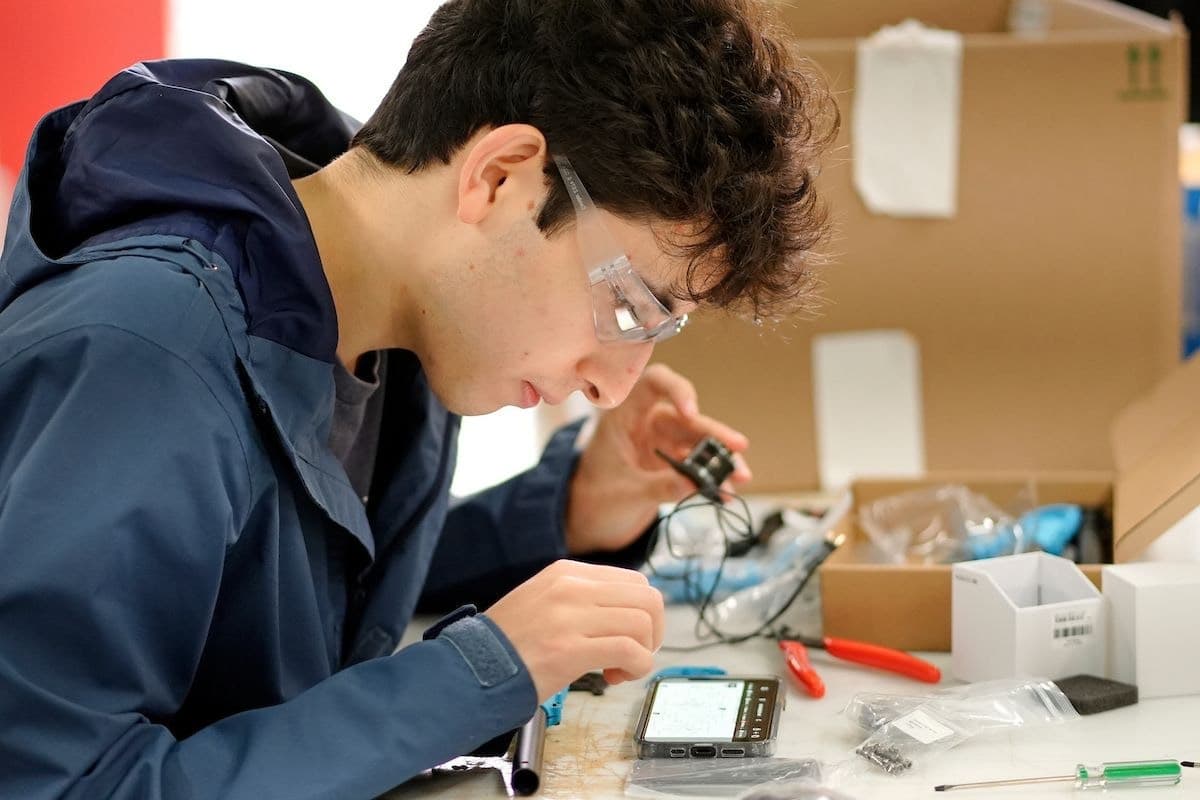
Working in teams, students assembled, programmed, and tested their drones. The workshop culminated in a “speed up of mapping” challenge (as defined below) within the Richmond Field Station's airspace, encompassing:
- Each participant builds and programs a (large) drone from a preassigned kit
- Each participant maps an area with their drone (RFS Drone Fields)
- Teams then combine their drones to assess the speed-up gained by the multi-drone system mapping gain vs. a single drone
- The participants ascertain the trade-off economics of multi-drone deployments
The enabling role of RFS
RFS maintains an FAA-Recognized Identification Area (FRIA) status, currently the only such location in the Bay Area. The FRIA status denotes a defined geographic area where UAVs may be operated without Remote ID (“aerial license plates”) equipment. This is particularly useful for student, academic and industry researchers with drones undergoing development that lack broadcasting capabilities during the initial design phase.
The event
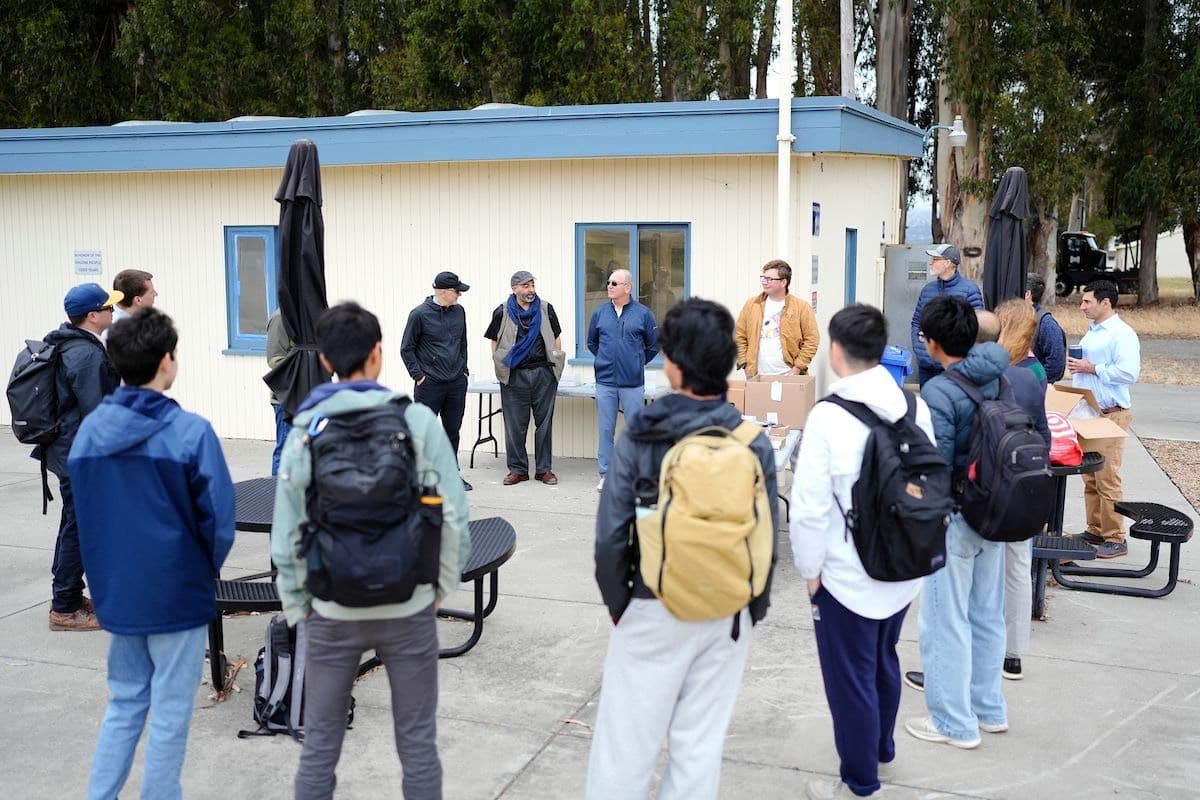
This event (M-DOC) was a direct government-academia partnership between the DEVCOM Army Research Laboratory and the Berkeley Drone Technologies research group, in collaboration with UAVs@Berkeley, the premier drone student club at UC Berkeley (UCB). M-DOC equipment support was provided by STOP FIRES CEO and UC Berkeley alum, Jack Russi. The Berkeley Drone Technologies research group provided core curriculum, and the UC Berkeley College of Engineering and RFS leadership provided access to the Richmond Field Station.
The following coordinators designed and executed the workshop, providing hands-on mentorship and framing the technical challenges with real-world applications or close analogs, such as “mapping, search and rescue” in degraded, denied, intermittent or latent (DDIL) bandwidth network contexts:
- UCB/Berkeley Drone Technologies Coordinator: Tarek Zohdi
- US Army Coordinator: Peter Khooshabehadeh
- Collaborators: Basil Cleveland (Berkeley Drones) and Joey Gottbrath (SOAR)
- Student Team Supervisor: John Lomax UAVs@Berkeley
- RFS Logistics: Sunny Quintana and Manuel Ordonez
The overall goal
The overall goal of the workshop was to expose students to a wide range of aspects of drone technologies spanning
- fundamental research: aerodynamics, structural analysis, propulsion, acoustics, thermal analysis, etc.
- simulation: machine-learning, artificial intelligence, digital-twins, cameras, LiDAR imaging, onboard computing, etc
- applications: societal, industrial or commercial, agricultural mapping, fire-fighting, defense, manufacturing, etc.
- controls: sensing, data acquisition, communications, autonomy, navigation, power-supply, etc.
- manufacturing: fabrication methods, 3D-Printing, cost-analysis, scale-up, etc.
- education: pedagogy, training paradigms, literacy, access, outreach, etc.
RFS
The M-DOC event is an example of the many types of activities at the RFS, which also hosts: (1) university research units (2) startup companies (3) registered student organizations and (4) government partners. More than 1,000 people across 40 university research units, 30 companies and over 10 student organizations conduct activities at RFS. The RFS provides a unique resource for student hands-on experiential learning, at scales not possible in campus labs. Due to the importance of such opportunities for its educational mission, UC Berkeley’s College of Engineering (COE) has worked in close partnership with the RFS team to establish the Student Organization Applied Research (SOAR) facility that provides resources for large-scale fabrication and design. The SOAR facility was used to support the M-DOC challenge, which is expected to continue as a semi-annual event.